Nepal in Crisis
The Complete Background, Causes, and Future Prospects of Nepal’s Most Severe Political Crisis in Years
Current Crisis Overview
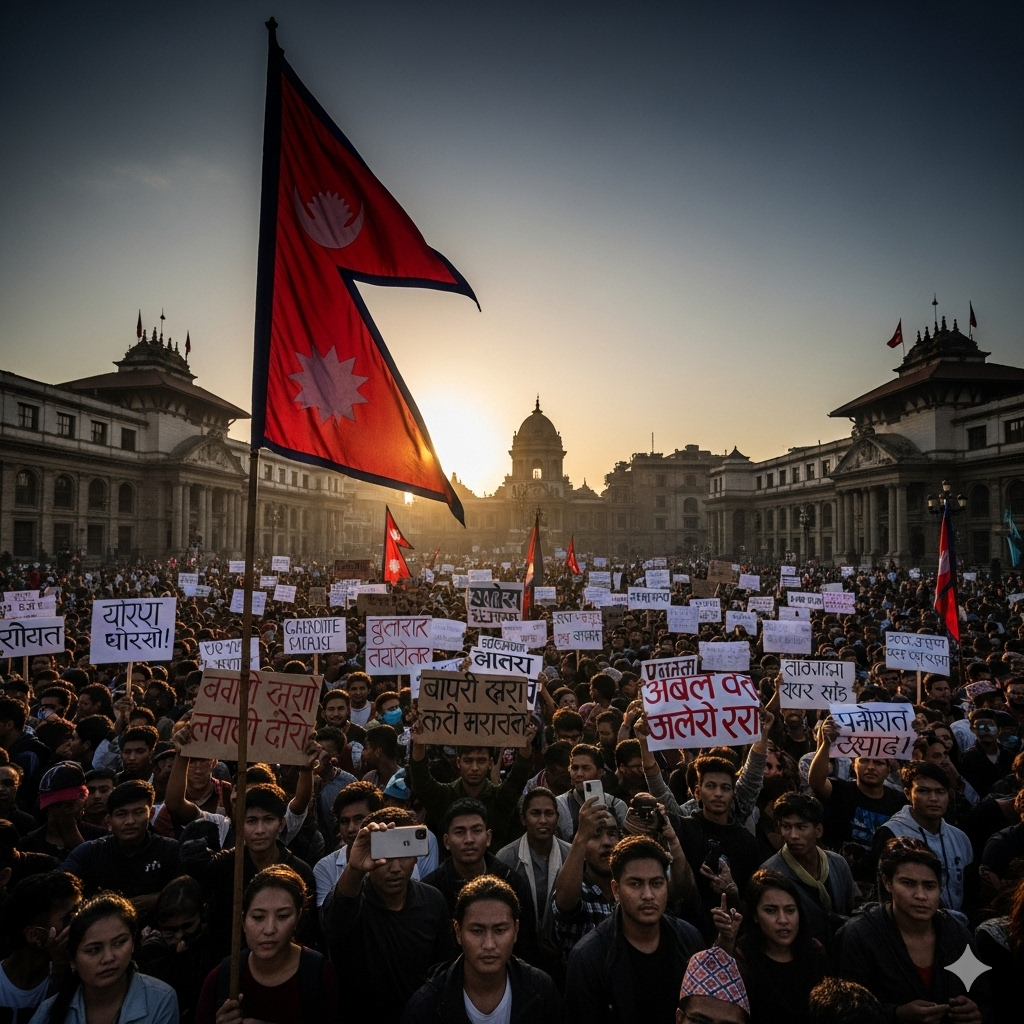
Nepal is experiencing its most severe political crisis in years, triggered by massive Gen Z-led protests that forced Prime Minister KP Sharma Oli to resign on September 9, 2025. The violent demonstrations resulted in at least 19 deaths and over 300 injuries, with protesters setting fire to parliament buildings, government offices, and political leaders’ residences.
President Ramchandra Paudel accepted Oli’s resignation and has initiated the process to form a new government according to Nepal’s constitution.
Crisis Timeline
Social Media Ban
Sept 4, 2025Government banned 26 social media platforms including Facebook, X, YouTube, Instagram, and WhatsApp
Mass Protests Begin
Sept 5-8, 2025Gen Z-led demonstrations escalate, with protesters targeting government buildings and political leaders’ residences
PM Oli Resigns
Sept 9, 2025Prime Minister KP Sharma Oli submits resignation following violent protests and mounting pressure
Youth Unemployment
Ages 15-24 in 2022-23
Governments Since 2008
None completed full term
Annual Migration
Skilled professionals leaving
The “Nepo Kids” Movement
For months before the protests, young Nepalis had been running online campaigns contrasting the lavish lifestyles of politicians’ children with the struggles of ordinary youth.
Videos showed politicians’ children driving luxury cars while young people worked low-paid jobs in Gulf countries.
Social Media Catalyst
26 platforms banned to suppress anti-corruption movements
Who Is Responsible?
Political Leadership Failures
KP Sharma Oli (Age 72)
Fourth-term PM accused of authoritarian tendencies. Blamed “vested interest groups” but failed to address corruption allegations directly.
Systemic Political Class
Aging leaders in their 70s rotating power, leading to calls for generational change.
Institutional Failures
Law Enforcement
Excessive force including live ammunition condemned by Human Rights Watch as “appalling disregard for lives”.
Governance System
Proportional representation creates unstable coalitions instead of solving factional problems.
External Factors
🌏 Geopolitical Pressures
Constant balancing between India and China creates internal political maneuvering.
💼 Economic Dependency
Limited opportunities force youth migration, creating brain drain and social tensions.
International & Regional Implications
🇮🇳 India’s Concerns
Views Chinese influence as threatening security interests and regional dominance. Crisis provides opportunities to reassert influence.
Strategic Priority: Counter Chinese Belt & Road Initiative
🇨🇳 China’s Investments
$10.74 billion in projects secured (2015-2022) through Belt and Road Initiative. Political instability threatens investments.
Risk: Infrastructure projects may face delays
🌏 Regional Pattern
Nepal’s crisis follows youth-led movements across South Asia:
Future Prospects & Scenarios
Nepali Congress
Sher Bahadur Deuba (78) positioned for PM role given parliamentary strength
Coalition Gov’t
New power-sharing arrangement between major parties
Generational Change
Balendra Shah (35), Kathmandu mayor & former rapper, represents youth
Critical Challenges Ahead
⚡ Immediate
- • Restore law and order
- • Form stable government
- • Rebuild damaged infrastructure
- • Address unemployment crisis
🔧 Long-term Reforms
- • Constitutional amendments
- • Anti-corruption measures
- • Youth inclusion in politics
- • Economic diversification
Economic Recovery Path
Job Creation
Develop industries to employ educated youth domestically
Infrastructure
Complete stalled development projects
Education Reform
Align outcomes with market demands
Entrepreneurship
Access to finance and business development
Essential Structural Reforms
🛡️ Anti-Corruption
Mechanisms with real enforcement power
🌍 Economic Diversification
Reduce dependency on remittances
👥 Youth Programs
Employment and skills development initiatives
International Relations Strategy
The Diplomatic Balancing Act
Nepal must continue its delicate diplomatic balance between India and China while pursuing strategic objectives:
Development Assistance
From both neighbors
Avoid Debt Traps
Sustainable financing
Maintain Sovereignty
Non-alignment policy
Geographic Advantage
Economic benefits
Conclusion: A Critical Crossroads
decades of accumulated grievances over corruption, economic mismanagement, and political exclusion that have created a combustible situation.
opportunity for fundamental reforms. The success of any future government will depend on its ability to address the underlying causes: youth unemployment, systemic corruption, and the lack of genuine democratic accountability.
The Stakes
Without significant structural changes, Nepal risks continuing its cycle of political instability that has prevented the nation from realizing its development potential.
support rather than undermine Nepal’s democratic institutions and development aspirations.
domestic political maturity and responsible international engagement to help this Himalayan nation achieve the stability and prosperity its people deserve.
Stay Updated on Nepal’s Crisis
Follow Global Vision Post for comprehensive coverage and analysis of Nepal’s ongoing political situation and its implications for South Asian geopolitics.
About the Author