
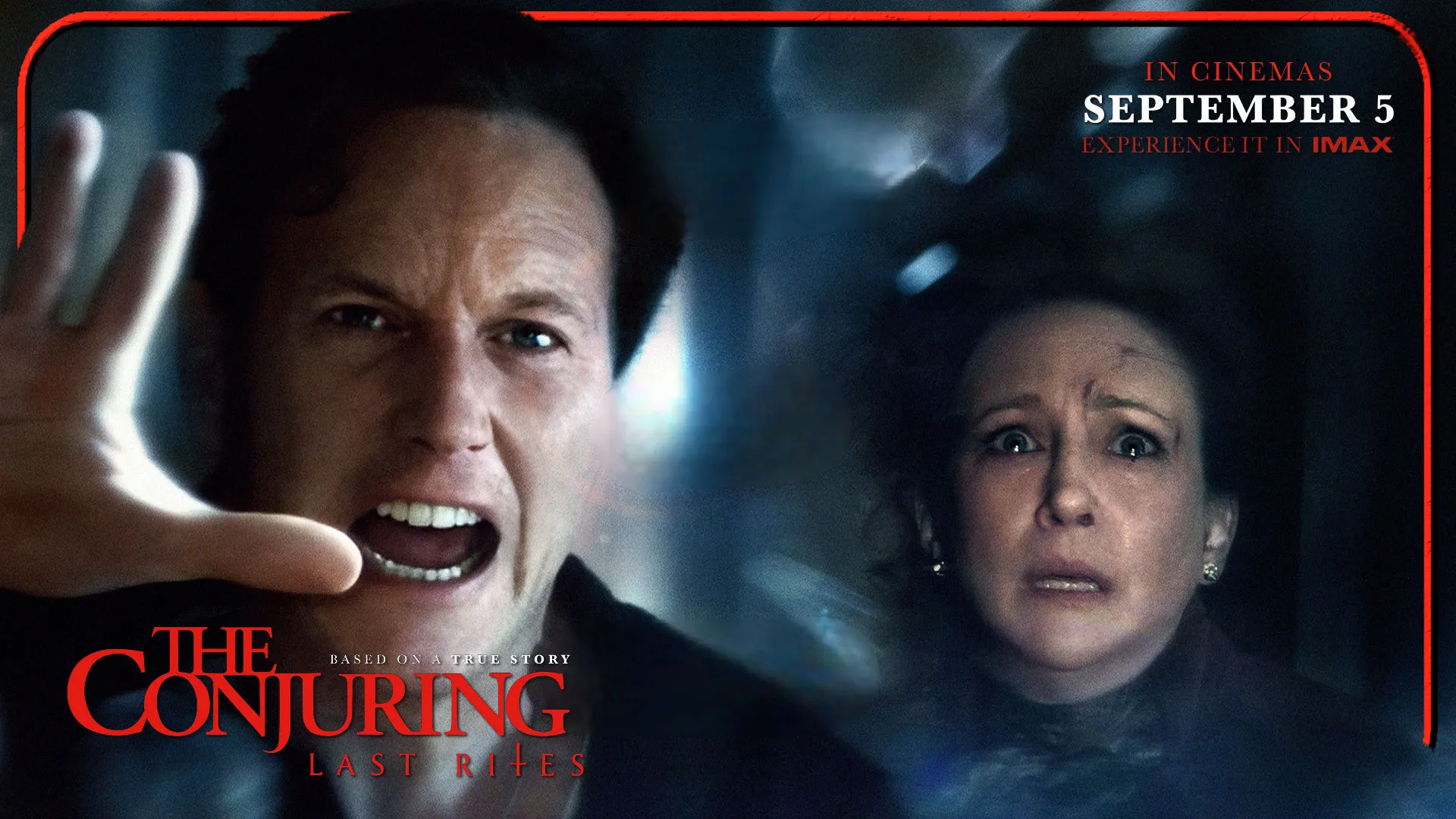
The Conjuring: Last Rites
A Bittersweet Farewell to Horror Royalty
Plot Overview
The Conjuring: Last Rites serves as the ninth and final installment in the main Conjuring trilogy, concluding the Warren family saga. The film centers on one of Ed and Lorraine Warren’s most personal investigations, rooted in the real-life Smurl haunting that occurred in Pennsylvania from 1974 to 1989.
The narrative begins in 1964 with the birth of Judy Warren, where young Ed and Lorraine experience a supernatural encounter involving an oversized mirror during an exorcism, rushing to the hospital where they miraculously revive their apparently lifeless daughter through prayer. This opening establishes the film’s central tension: the possibility that Judy may be cursed or that Lorraine unknowingly offered her daughter’s soul to demonic forces in exchange for survival.
Fast-forwarding to the 1980s, adult Judy (Mia Tomlinson) is planning her wedding to Tony Spera (Ben Hardy) when the family becomes involved with the Smurl family’s haunting case. Unlike previous entries where the Warrens fought to save strangers, this investigation becomes deeply personal when Lorraine experiences visions of losing not only her husband but also her daughter and son-in-law.
Performances
Patrick Wilson delivers another solid performance as Ed Warren, bringing “quiet gravitas and dry humor” to the role while maintaining the character’s spiritual strength and devotion. Critics praise his ability to balance the supernatural elements with genuine emotion, particularly in scenes exploring the psychological toll of their decades-long battle against evil.
Vera Farmiga anchors the film with what many consider her most emotionally demanding performance as Lorraine Warren. She skillfully portrays “a balance of strength and fragility,” especially when confronting visions of losing her family. Critics universally praise her ability to convey both supernatural terror and maternal vulnerability.
Mia Tomlinson makes her franchise debut as adult Judy Warren, effectively bridging the gap between the young girl audiences remember from previous films and a capable adult. Critics note she brings authenticity to the role while carrying emotional weight of being the Warren family’s next generation.
Direction & Technical Aspects
Michael Chaves returns as director after helming The Conjuring: The Devil Made Me Do It (2021). His direction demonstrates improved atmospheric control compared to his previous Conjuring entry, with critics noting this feels like “a frothy return to the aesthetic pleasures of James Wan’s first film”.
Cinematography successfully recreates the 1980s setting while maintaining the franchise’s signature dark, foreboding visual style. Standout sequences include a particularly effective scene where Judy is pursued by a ghostly figure while trying on wedding dresses in front of an infinity mirror, which critics describe as “among the franchise’s most stunning scares”.
Sound Design and Music maintain the franchise’s high standards, with effective use of silence and sudden audio jolts to create tension. However, some critics note the film relies too heavily on familiar audio cues rather than developing fresh sonic approaches to horror.
Visual Effects present a mixed bag, with some supernatural sequences appearing polished while others feel over-reliant on CGI rather than practical effects. The film’s climactic sequences blend both approaches with varying degrees of success.
Critical Reception
The Conjuring: Last Rites has received mixed to positive reviews, currently holding a 55% rating on Rotten Tomatoes based on 78 critic reviews, with an average score of 5.8/10. The Metacritic score stands at 54 based on 24 reviews. However, audiences have responded more favorably, with a 77% Verified Audience Score on Rotten Tomatoes from over 250 reviews, averaging 4.1/5 stars.
- Strong emotional core focusing on family relationships
- Effective return to the atmospheric horror style of the original film
- Wilson and Farmiga’s continued chemistry and emotional authenticity
- Several genuinely frightening sequences
- Pacing issues: Many critics describe the film as “overlong”
- Predictable scares: Relies on familiar horror tropes
- Emotional focus over horror: Prioritizes sentiment over genuine terror
- Rushed climax: Final confrontation feels “underdeveloped”
Box Office Performance
The Conjuring: Last Rites has achieved significant commercial success, setting preview records for the franchise with $8.5 million in Thursday night previews. This represents the highest preview total for any Conjuring film and any horror movie in 2025.
Opening weekend projections range from $35-55 million domestically. In India, the film collected approximately ₹14.9 crores on opening day, significantly outperforming both Baaghi 4 and The Bengal Files.
The film sold over 300,000 advance tickets in India alone, with nearly 200,000 from major multiplex chains, demonstrating the franchise’s continued global appeal.
Franchise Context
As the final entry in the main Conjuring trilogy, the film includes numerous cameo appearances from previous franchise characters, including Lili Taylor and Mackenzie Foy reprising their roles from the first film, Frances O’Connor and Madison Wolfe from the second film, and Julian Hilliard from the third film. These appearances serve as a farewell tour for the franchise’s extended family.
The film concludes with archival footage of the real Ed and Lorraine Warren, providing emotional closure that ties the fictional narrative to its real-world inspirations. This approach offers fans a meaningful goodbye while honoring the actual people who inspired the franchise.
Themes and Deeper Meaning
The Conjuring: Last Rites explores themes of legacy, sacrifice, and the cost of battling evil. Unlike previous entries focused on saving strangers, this film examines how decades of confronting supernatural malevolence affects the investigators themselves and their family.
The film questions whether suppressing traumatic memories through determination is preferable to confronting them directly with courage. For the Warren family, this philosophical inquiry becomes literally life-and-death as they transition into the next phase of their lives—or potentially beyond life itself.
About the Author